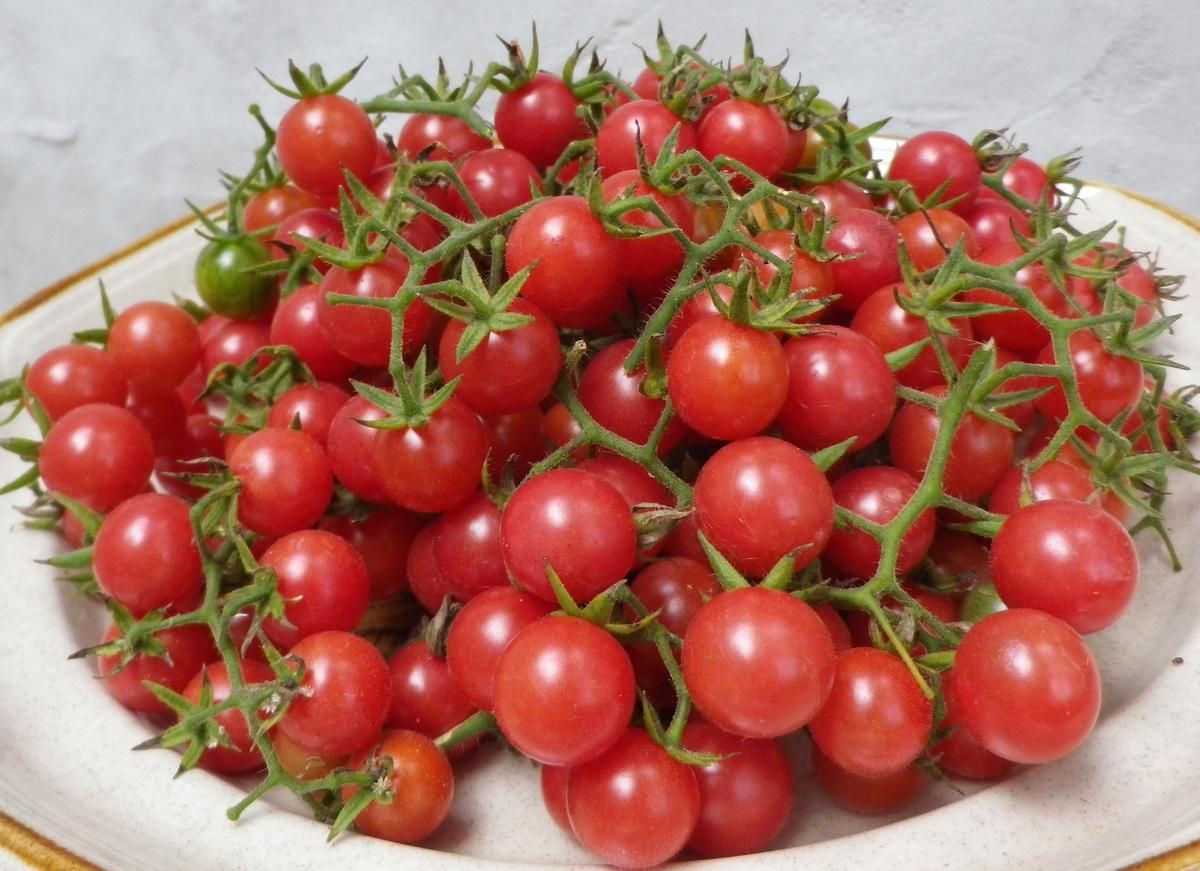
56 days (Indeterminate) [Seedstock from Melissa DeSa of Florida] Vigorous, disease-resistant plants bear 'til frost. Sweet, dark pink, ½ in. fruits. Similar to Matt’s Wild Cherry, but pinker, with some differences in flavor.
Packet: Seed size varies considerably; 0.16 g unless noted (about 40-83 seeds) sows 100 ft.Codes: refer to Key to Tomato Disease Tolerance.
Everglades Cherry Tomato
Source: Southern Exposure Seed Exchange
Photo Credit: Southern Exposure Seed Exchange
Source Credit: Southern Exposure Seed Exchange
Known disease tolerance or resistance is indicated in parentheses after the variety name. V, F, and N at the end of a variety name indicate known resistance to verticillium wilt, fusarium wilt, and nematodes, respectively. Many factors affect disease resistance and results may vary from region to region and from season to season. Disease resistant varieties will not be totally disease-free but they will resist or tolerate disease better than other varieties. Note that many heirloom tomatoes have not been extensively tested for disease tolerance either in the laboratory, or in extensive field trials - absence of disease resistance information in the variety description does not imply lack of resistance.
ab = Alternaria (early blight) fw2 = Fusarium wilt, race 2 asc = Alternaria stem canker gw = Gray wall an = Anthracnose gls = Gray leaf spot ber = Blossom end rot lb = Late blight bw = Bacteria wilt nhr = Nail head rust cf = Cat facing rkn = Root knot nematode clm = Cladosporium leaf mold st = Stemphylium spot cr = Crack resistance sun = Sun scald cs = Crease stem tmv = Tobacco mosaic virus fw1 = Fusarium wilt, race 1 vw = Verticillium wilt

