


Tomato Growing Guide
Tomatoes showcase an impressive variety of colors, sizes, shapes, and maturities. Ripe tomatoes can be found in shades of red, orange, pink, white, or even green, with shapes that range from classic globe to unique pear-like and cherry sizes. As a member of the Solanaceae family, which includes potatoes, peppers, and eggplants, tomatoes are essential for any garden. For home gardeners eager to grow their own tomato transplants from seeds, the options are endless, allowing you to select from a large variety of tomatoes that match your desired color, texture, size, and taste. Your garden will undoubtedly thrive with these remarkable fruits!
How to Grow Tomatoes
-
Tomato plants like a minimum of 6 hours of sunlight.
-
They need soil that has a neutral pH between 6.2 pH and 6.8 pH
-
When sowing seeds indoors, sow them 4 - 6 weeks before last frost date so they are ready to transplant.
-
Plant tomato seedlings when the ambient temperatures at night are consistently above 50 degrees Fahrenheit and day time temperatures are consistently above 60 degrees Fahrenheit.
-
Do not plant until you know that the danger of frost is past. Tomatoes do not tolerate frost or cold very well. If your plants are getting to big, pot them up into a larger container until you are able to transplant them directly in the garden.
-
If you have started your tomato seeds indoors, you will need to get your plants use to being outside. This process is called hardening off. Allow your plants time to get use the air temperature outside especially if it is still a little cooler than underneath your grow lights!
-
Choose a location in full sun to plant tomatoes. Although ours seem to enjoy the shade in the afternoon if the temperatures are really hot here in Georgia!
-
Tomatoes grow well in containers, just make sure that the container is deep enough, at least 18 inches, to accommodate the roots and that the container is big enough so that there is sufficient room around each tomato plant as it grows.
Common Tomato Types
-
Standard Tomatoes: usually are smooth and round, and are larger in size than salad tomatoes but smaller than beefsteak types. Also called slicing or main season tomatoes, standard tomatoes are the most common tomato type. This group includes varieties such as Long Keeper.
-
Beefsteak Tomatoes: have the largest fruits, sometimes weighing up to a pound or more. They have dense flesh and numerous small seed cavities, and often mature late in the growing season. The term beefsteak refers to a group of tomatoes with similar fruit characteristics, although there also is a variety named Beefsteak. Usually these fruits are globe shaped, but some cultivars have an irregular shape. Common varieties include Cherokee Purple, Mortgage Lifter VFN, Granny Cantrell's.
-
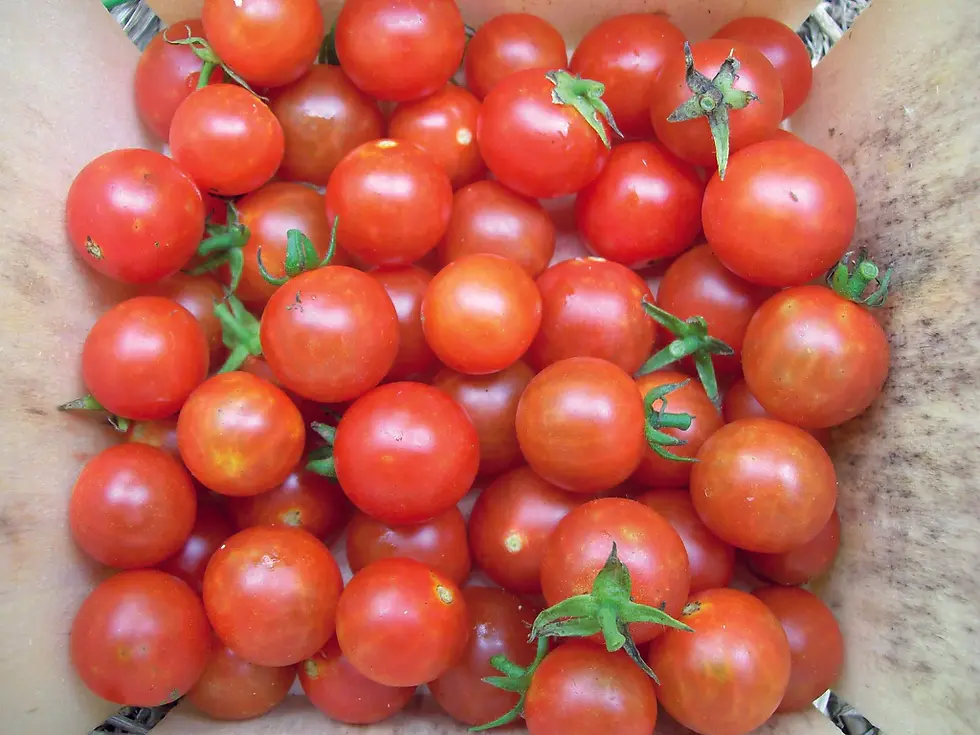
Salad Tomatoes: including currant, cherry, grape, and pear types, produce small, bite-sized fruits. These small-fruited varieties develop large, sprawling plants that grow and produce fruits even under hot, dry conditions. Common varieties include Sugar Cherry, Amy's Apricot Mix, Black Plum.
-
Paste Tomatoes: have thick, somewhat dry flesh, with small seed cavities and less locular gel, making them good for processing into sauces and tomato paste. Usually paste tomatoes have an elongated shape. Common varieties include Roma VF, Amish Paste, Hungarian Italian Paste, and Principe Borghese.
-
Indeterminate Tomatoes: often called vining tomatoes, grow continuously until killed by frost. Each plant has many branches and suckers, and plants can get quite large. These plants flower and set fruit continuously until the plant dies, resulting in a staggered harvest throughout the growing season.
-
Determinate Tomatoes: sometimes called bush tomatoes, grow only to a set height then stop. Determinate tomato plants range from less than 2 feet to about 3 feet tall. Plants develop short branches, each ending in a flower cluster, and then set fruit. Growth stops at a finite height and terminal flower clusters form at the top. Fruits ripen and are harvested in less than six weeks. Production is limited by the short height of the plant, as growth and branching is restricted. For this reason, determinate tomatoes are ideal for canning or freezing since the majority of the produce can be harvested and processed within a short time frame. Some determinate cultivars provide high early yields before other tomato types begin producing.
-
Semi-determinate Tomatoes: are intermediate in size between determinate and indeterminate types, producing fewer suckers than indeterminate plants, and usually reach a height of 3 to 5 feet.


Our Favorite Tomatoes To Grow
There are many varieties of Tomato to choose from. Below are some of our favorite varieties we love to grow.



Plant Spacing
-
Sow seeds indoors under grow lights. Pack seedling tray with growing medium. Place one seed per cell in seedling tray. If need be thin to one plant per cell.
-
Be sure to inoculate your growing medium with mychorizzal fungi. As the seeds germinate and develop roots this fungi will penetrate the root zone helping the plant to absorb nutrients better.
-
Sow seed at 1/4 inch depth
-
Ideal germination temperature is 75 degrees Fahrenheit. Use a heat pad with temperature control so you can set it to the ideal temperature.
-
Seeds germinate in 5-14 days with optimal conditions and variety.
-
Keep seedlings moist but not soaked. Use a 1020 bottom tray for bottom watering when starting indoors.
-
Tomato seeds can be directly sown into the ground, however, starting them indoors gives you the opportunity to get a head start on the growing season so that you do not need to wait until temperatures outside are ideal for seed germination.
-
When starting from seed in trays indoors, if needed thin to one plant per cell.
-
Transplant new seedlings to a 3" pot once seedlings develop 3 - 4 true leaves..
-
Indeterminate tomato variety transplants can be planted 1.5 - 2 ft apart if staked or trellised, in rows 2-3 feet apart.
-
Determinate tomato variety transplants can be planted 1.5 - 2 ft apart in rows 3-4 feet apart
Soil and Irrigation
-
Soil should be loamy and well draining with a pH between 6.0 - 6.5
-
Tomatoes are heavy feeders, so make sure you have put down 2 inches of compost that is full of good biology. Maintaining a healthy soil food web is essential for healthy and robust plants.
-
Foliar feed tomato plants with compost tea as needed. Apply compost tea with good biology (bacteria, fungi, nematodes etc) This well help reduce pest and disease load.
-
Using drip irrigation is preferable as this helps to keep the soil moist at appropriate levels. Keeps the foliage dry and prevents soil from being splashed up onto stems and leaves.
-
Consistent watering is essential. If the ground gets to dry the plant will not grow to its full potential.
-
Watering well and consistently after planting is going to be the most important thing for adequate germination.
-
Tomatoes grow best in looser well drained soils. Clay soils need to be amended with compost and organic matter to break up clay. This will make it easier for the roots to push through the soil and access nutrients.
-
Amending the soil with good compost and organic matter will ensure that it is loose enough for the roots to grow. This needs to be done well ahead of planting.
-
Amending your soil with compost tea as a soil drench through out the growing season. This will help greatly to reduce pest and disease load.


Benefits of Tomatoes
Tomatoes are loaded with a ton of nutrients that pack quite a nutritional punch. They are low in fats and high in protein, fiber, potassium, magnesium and calcium to name a just a few. Just 100g of diced raw Roma Tomato contains: 0.42g fat, 1g fiber, 10mg Calcium, 0.1mg Iron and 8.1mg of Magnesium, Potassium 194mg, Phosphorus 19mg, Vitamin C 17.8mg, 0 Cholesterol. Tomatoes also contain other beneficial nutrients such as alpha-lipoic acid, lycopene, choline, folic acid, beta-carotene and lutein (1).
Digestive Health
Tomato sauce provides both soluble and insoluble fiber, which supports gut health and healthy digestion.
Fresh tomatoes provide mostly insoluble fiber. Soluble fiber attracts water to create a gel-like texture during digestion, while insoluble fiber adds bulk to stool. Both of these nutrients support regular bowel movements that are easier to pass.
Although there is a misconception that nightshades—a family of plants that includes tomatoes —can cause digestive issues, tomatoes are generally safe to consume unless someone has an allergy or sensitivity.
Bone Health
Oxidative stress caused by reactive oxygen species influences the activity of both osteoclasts and osteoblasts. This is thought to impact the pathogenesis of skeletal system disorders, including osteoporosis, the most common skeletal metabolic disease. Lycopene has shown to have an advantageous effect on the skeletal health. Therefore it plays a vital role in protecting postmenopausal women from experiencing bone loss and research findings are demonstrating that lycopene has osteoprotective properties in both men and women.
Heart Health
The fiber, potassium, vitamin C, and choline content in tomatoes all support heart health. An increase in potassium intake, along with a decrease in sodium intake, is the most important dietary change the average person can make to reduce their risk of cardiovascular disease. Tomatoes also contain folate. This helps to balance homocysteine levels. Homocysteine is an amino acid that results from protein breakdown. It is said to increase the risk of heart attacks and strokes. According to research, the management of homocysteine levels by folate reduces one of the risk factors for heart disease.
Cancer Prevention
Tomatoes are an excellent source of vitamin C and other antioxidants. With these components, tomatoes can help combat the formation of free radicals. Free radicals are known to cause cancer.
A recent study in the journal Molecular Cancer Research linked the intake of high levels of beta-carotene to the prevention of tumor development in prostate cancer.
Tomatoes also contain lycopene. Lycopene is a polyphenol, or plant compound, that has been linked with one type of prostate cancer prevention. It also gives tomatoes their characteristic red color.
Weight Management
Research suggests that those who consume tomatoes or tomato products such as sauce and juice see a decrease in body weight, BMI, waist circumference, total cholesterol, and increased HDL levels.
Of course, tomatoes are not the only food source of lycopene. Watermelon, guava, grapefruits, asparagus, red cabbage, and persimmons all contain lycopene. Eating these foods along with tomato consumption will definitely improve your waistline!
Eye Health
Tomatoes are a rich source of lycopene, lutein, and beta-carotene. These are powerful antioxidants that have been shown to protect the eyes against light-induced damage, the development of cataracts, and age-related macular degeneration (AMD).
The Age-Related Eye Disease Study (AREDS) recently found that people with high dietary intake of the carotenoids lutein and zeaxanthin, both present in tomatoes, had a 35 percent reduction in the risk of neovascular AMD.
Disclaimer: This information has not been evaluated by the Food and Drug Administration and it is not intended to diagnose, treat, cure, or prevent any disease. For educational purposes only.
Harvesting, Storing & Preserving Tomatoes
-
Harvest your tomatoes when they are Tomatoes develop their optimal flavor, nutrition, and color when fully ripe on the vine.
-
The tomato should be its full color (red, orange, yellow, or purple depending on the variety), come off the vine easily, and feel supple, slightly soft, but not too soft.
-
You can preserve tomatoes through various methods like freezing, canning (water bath or pressure), drying (dehydration or freeze drying), or pickling. Check out our favorite tools for preserving your harvest here.
-
Canning tomatoes is a straightforward way to preserve the taste of fresh, ripe tomatoes year-round. All you need are tomatoes, a large pot, and sealable jars. This method allows you to capture the peak flavor of summer tomatoes. It's best to remove the skins before canning and use new jars to ensure a proper seal. Once processed, home-canned tomatoes can last up to a year if stored in a cool, dry, and dark place.
-
Freezing tomatoes is the simplest way to preserve them. You don't need to peel them beforehand, as freezing makes them easy to peel later. Simply store whole tomatoes in a zip-top bag in the freezer, scoring the bottoms with an X and removing as much air as possible. For better results, use a food vacuum sealer.
-
Frozen tomatoes work great for cooking and sauces but are less suitable for salads and sandwiches.
-
Salsa is a versatile way to preserve tomatoes, turning them into a flavorful condiment with uses that go way beyond traditional Mexican cuisine.
-
Using fruit boxes with separators is a great way to store any green tomatoes you may pick right towards the end of the season.
-
We use a freeze dryer and a dehydrator to dry tomatoes. Both have their distinctive advantages and are worth the investment. Once dried, tomatoes can be placed in a blender and processed until powered, making it a great option for additional flavor to soups and other dishes as well as a thickener.
-
A dehydrator or oven set at lowest temperature is another way to dry tomatoes with making sun dried tomatoes.

Dealing with Common Tomato Pests
As passionate gardeners, we understand the excitement of nurturing our plants, but we also know that pesky pests can be a challenge! That’s why we compiled a list of the most common pests that might be lurking around your crops. Let’s conquer these challenges together and keep our gardens thriving!
Aphid
Aphids are small, 1/16- to 1/8-inch-long (2-4 mm), pear-shaped, soft-bodied insects. They can range in color from green, black, red, yellow, brown or gray.
Symptoms:
Symptoms of severe aphid feeding include twisted and curled leaves, yellow foliage, stunted or dead shoots, poor plant growth.
Mosaic virus in beans is caused by Aphids.
Leaf Miner
The term "leafminer" is used to refer to the larvae of the leaf miner fly that develops and feeds inside the leaves of plants.
Symptoms:
Damage occurs in both the upper and lower sides of the leaves. Leafminer larvae form visible tunnels as they feed within
leaf tissue.
Damaged caused by leaf miners can result in poor photosynthesis and lead to poor bean development.
Cutworm
Larvae are dull gray to brown (depending on the species). Cutworms notably curl into a 'C' when they are disturbed. Cutworms are most active and cause the most damage during spring and early summer months.
Symptoms:
Larvae feed with chewing mouthparts and can clip off seedlings at the soil line reducing stands. Later in the season, fruit and foliage may be damaged. Wilted plants may be the result of damaged stem due to feeding.
Tomato Fruit Worm
The adult tomato fruitworm is a moth. It is usually light yellowish-olive with a single dark spot near the center of each forewing. It lays eggs singly, usually on the lower sides of leaflets close to the flower or fruits. The eggs are creamy-white when laid but develop a reddish-brown band just prior to hatching. Larvae (caterpillars) hatch from the eggs. The larvae are yellowish-white with a brown head. The color of older larvae varies from greenish-yellow to brown or even black with paler stripes running lengthwise on the body. Larvae grow to a size of about 1½ inches in length.
Symptoms:
Fruitworms feed on tomato leaves and fruit. Distorted leaves often result when they feed upon the tips of the leaves in the developing bud. Larvae may also bore into stalks or midribs. When fruit is present, larvae enter it soon after hatching. They prefer green fruit and will enter it usually at the stem end, causing extensive direct damage and promoting decay. The larvae are cannibalistic, so there is rarely more than one larva per fruit. Larvae usually complete development in a single fruit, but they may feed in several when fruits are small.
Leaffooted Bug
Leaffooted bugs are one of the many pests commonly found throughout the southern United States. Leaffooted bugs get their name from the flattened tibia of the hind leg, which gives this segment a leaf-like appearance. They feed on a wide variety of crops, causing damage to fruits, vegetables, grains, nuts, and ornamentals. They are relatives of stink bugs.
Symptoms:
Fruit may be discolored, shriveled, or misshapen or have sunken areas or depressions. Leaves may turn yellow or brown. Crops may have stunted growth and seeds may be shriveled, deformed, or shrunken.
Other notable signs are bright red nymphs on clusters on leaves.
Stink Bugs
All adult stink bugs are shield-shaped. Green stink bugs are about 9/16 to ¾ inch in length. They are bright green with a narrow orange-yellow line bordering the major body regions. Brown stink bugs are dull grayish-yellow and ½- to ⅝-inch long
All adult stink bugs are shield-shaped. Green stink bugs are about 9/16 to ¾ inch in length. They are bright green with a narrow orange-yellow line bordering the major body regions. Brown stink bugs are dull grayish-yellow and ½- to ⅝-inch long
Symptoms:
Nymphs and adults of all three of the bugs pierce plants with their needlelike mouthparts and suck sap from pods, buds, blossoms, and seeds. The degree of damage depends, to some extent, on the developmental stage of the plant when the stink bug pierces it. Immature fruits and pods punctured by bugs become deformed as they develop. Seeds are often flattened and shriveled, and germination is reduced.
Spider Mites
The two-spotted spider mite and the red spider mite being the most common in the United States. Their colors can range from red, green, yellow, orange, to even brown. They have two main body parts and eight legs. Spider mite infestations are particularly common during hot, dry summer weather.
Sypmtoms:
The signs that you have spider mites include, mottled yellow-brown spots on leaves, leaf curl, leaf drop and the telltale sign of webbing. Spider mites are very hard to see.
White Fly
The silverleaf whitefly is small, about 1/32-inch long, and whitish-yellow. The head is broad at the antennae and narrow toward the mouthparts. The wings are held roof-like at about a 45-degree angle, whereas other whiteflies usually hold the wings nearly flat over the body.
Symptoms:
Silverleaf whiteflies damage plants in two ways: directly and indirectly. Direct damage results from their feeding activity, which involves them sucking plant sap. Both the adults and nymphs contribute to direct damage. Chlorotic (yellow) spots sometimes appear at the feeding sites on leaves. Heavy infestations cause leaf wilting. In addition, as they feed, they excrete honeydew (a sugary waste substance), on which the black sooty mold fungi grow. The resulting dark splotches on the leaves may reduce photosynthesis and other physiological functions of the plant. Indirect damage results from their activity as disease vectors (carriers). The silverleaf whitefly carries and spreads several important viral diseases of tomatoes, lettuce, and melons in the Southeastern United States.
Thrips
Thrips are small, winged insects with rasping-sucking mouthparts. They are generally less than 1/8th of an inch long. Their bodies are elongated, more like a grain of rice than the rounded shape of aphids and mites. Thrips can be yellow, brown, or black.
Symptoms:
Thrips feed on young leaves, buds, flowers, and even small fruit. Leaves infested with thrips dry out and have a scarred or silver-flecked appearance. Small brownish specks of excrement on the undersides of leaves may also be seen. Infested flower buds fail to open, or the blooms are deformed. Damaged flowers become streaked and discolored. To check for thrips shake injured parts of the plants over a white piece of paper.
Root Knot Nematodes
Tomato plants can be susceptible to root-knot nematodes, which are microscopic, roundworms that inhabit the soil. Root-knot nematodes are parasitic nematodes, meaning they infect and feed on plants. Unlike other diseases and pests, root knot nematodes survive by feeding directly off of the nutrients pumped through tomato roots. They form galls that can reach up to an inch (2.5 cm.) wide where they hide and reproduce, causing a number of symptoms that point to problems in infected plants' transport systems.
Symptoms:
Yellowing plants, stunted growth, and general decline are early symptoms. When you dig up your plant you will find roots that have a lot of unusual knobby growths. This is tell tail sign that your plant is infected with these parasites.
Hornworm
Hornworms feed primarily on solanaceous plants. Hornworm eggs are smooth, spherical, and about 1/16 inch in diameter. Light green at first, they turn white before hatching. Tomato hornworm larvae have eight V-shaped markings on each side; the horn is straight and black. Both species are about 3- to 3½-inches long when fully grown.
Symptoms:
Hornworms strip leaves from tomato vines. If a heavy infestation develops, these caterpillars also feed on developing fruit. Rather than bore into the fruit, they feed on the surface, leaving large, open scars. Fruit damage, however, is much less common than loss of leaves. Hornworm damage usually begins to occur in midsummer and continues throughout the remainder of the growing season.
Slugs & Snails
These are members of the mollusk family. With the exception of snails shell, these two pests are very similar. Slugs are shades of brown, black and grey. Both pests excrete a slimy coating to protect themselves an to make traveling easier. They feed mostly at night, often found under debris during the warmer drier times of the year.
Symptoms:
They can do significant damage. Especially to to seedlings and tender plant growth. They can devour entire seedlings overnight. Irregular holes along the margin or the center of the leaf is a tell-tale sign. If you do not see any, look for the slime trails or go snail and slug hunting at night!
Colorado Potato Beetle
Adult Colorado Potato Beetles are 1/3" long with a rounded hard shell covering their wings. The wing covers are bland and tan striped. The beetles head has several irregular black spots. Full gown larvae are 1/2" long, fat and reddish pink with rows of black dots on their sides and they have a small black head. They can produce up to three generations each year.
Symptoms:
Both adult and larva feed on leaves of host plants, skeletonizing them very quickly. A plant can be completely defoliated leaving behind tell-tale pellets of black excrement.
Flea Beetle
Small round holes in leaves and insects that jump like fleas are two signs that a plant is infested with flea beetles. These shiny oval beetles may be black, brown, bronze, or striped and are only 1/10 inch long.
Symptoms:
A light infestation of flea beetles is characterized by tiny round pits or holes in leaves, creating a shot-hole pattern. Heavier infestations may cause bleached or pitted areas, ragged holes, or even total loss of leaves resulting in wilted or stunted plants.
Flea beetles may also be vectors for transmission of diseases such as bacterial wilt in corn.
Insect and Bug Guides
Our Insect and Bug Guides are here to help you prevent and manage insect and bug problems in your garden.


Dealing with Common Tomato Diseases
Get ready to take control of plant diseases! Understanding and managing these challenges is well within your reach. Check out list of common plant diseases, and together, we’ll conquer them! Let’s empower your plants to thrive like never before!
Early Blight
This disease is caused by the fungi Alternaria linariae (formally known as A. solani), The fungus survives on infected debris in the soil, on seed, on volunteer tomato plants, and other solanaceous hosts, such as Irish potato, eggplant, and black nightshade (a common, related weed).
Symptoms:
is first observed on the plants as small, brown lesions mostly on the older foliage. Spots enlarge and concentric rings in a bull’s-eye pattern may be seen in the center of the diseased area. The tissue surrounding the spots may turn yellow. If high temperature and humidity occur at this time, much of the foliage is killed. Lesions on the stems are similar to those on leaves and sometimes girdle the plant if they occur near the soil line (collar rot). On the fruits, lesions attain considerable size, usually involving nearly the entire fruit. Concentric rings are also present on the fruit. Infected fruit frequently drops.
Late Blight
Late blight is a potentially serious disease of potato and tomato and is caused by the water mold pathogen Phytophthora infestans. Late blight is especially damaging during cool, wet weather. This pathogen can affect all plant parts.
Symptoms:
Young leaf lesions are small and appear as dark, water-soaked spots. These leaf spots will quickly enlarge, and a white mold will appear at the margins of the affected area on the lower surface of leaves. Complete defoliation (browning and shriveling of leaves and stems) can occur within 14 days from the first symptoms. Infected tomato fruits develop shiny, dark, or olive-colored lesions, which may cover large areas. Fungal spores are spread between plants and gardens by rain and wind. A combination of daytime temperatures in the upper 70s °F with high humidity is ideal for infection.
Bacterial Wilt
Bacterial wilt or Southern bacterial blight is a serious disease caused by Ralstonia solanacearum (formerly Pseudomonas solanacearum). This bacterium survives in the soil for extended periods and enters the roots through wounds made by transplanting, cultivation, insect feeding damage, and natural wounds where secondary roots emerge. Disease development is favored by high temperatures and high moisture.
Symptoms:
The bacteria multiply rapidly inside the water-conducting tissue of the plant, filling it with slime. This results in rapid wilt of the plant while the leaves stay green. If an infected stem is cut crosswise, it will look brown and tiny drops of yellowish ooze may be visible.
Septona Leaf Spot
This destructive disease of tomato foliage, petioles, and stems (fruit is not infected) is caused by the fungus Septoria lycopersici.
The fungus is most active when temperatures range from 68 to 77° F, the humidity is high, and rainfall or overhead irrigation wets the plants.
Symptoms:
nfection usually occurs on the lower leaves near the ground, after plants begin to set fruit. Numerous small, circular spots with dark borders surrounding a beige-colored center appear on the older leaves. Tiny black specks, which are spore-producing bodies, can be seen in the center of the spots. Severely spotted leaves turn yellow, die, and fall off the plant. Infection usually occurs on the lower leaves near the ground, after plants begin to set fruit. Numerous small, circular spots with dark borders surrounding a beige-colored center appear on the older leaves. Tiny black specks, which are spore-producing bodies, can be seen in the center of the spots. Severely spotted leaves turn yellow, die, and fall off the plant. The fungus is not soil-borne but can overwinter on crop residue from previous crops, decaying vegetation, and on some weeds related to tomato.
Yellow Curl Leaf
Tomato yellow leaf curl virus (TYLCV) is not seed-borne but is transmitted by whiteflies. Whiteflies may bring the disease into the garden from infected weeds nearby, such as various nightshades and jimsonweed. After infection, tomato plants may be symptomless for as long as 2 to 3 weeks. This disease is extremely damaging to fruit yield in both tomato crops.
Symptoms:
Symptoms in tomato plants are the upward curling of leaves, yellow (chlorotic) leaf margins, smaller leaves than normal, plant stunting, and flower drop. If tomato plants are infected early in their growth, there may be no fruit formed. Infected plants may appear randomly throughout the garden.
Leaf Mold
The fungus Passalora fulva causes leaf mold. It is first observed on older leaves near the soil where air movement is poor and humidity is high.
Symptoms:
The initial symptoms are pale green or yellowish spots on the upper leaf surface, which enlarge and turn a distinctive yellow.
Under humid conditions, the spots on the lower leaf surfaces become covered with a gray, velvety growth of the spores produced by the fungus. When infection is severe, the spots coalesce, and the foliage is killed. Occasionally, the fungus attacks stems, blossoms and fruits. Green and mature fruit can have a black, leathery rot on the stem end.
Blossom End Rot
Blossom end rot is a physiological disorder of tomato. The cause of this disorder is a calcium deficiency in the developing fruit. Extreme fluctuations in moisture, rainy or cloudy weather with high humidity, cool temperatures, insufficient soil calcium, root pruning from nearby cultivation, and excessive ammoniacal (NH4 +) nitrogen, potassium, or magnesium fertilization can also increase the chances of blossom end rot, especially early in the season.
Symptoms:
Symptoms are water-soaked spots on the blossom end of the fruit. These spots enlarge and become black. Secondary infection by decay-causing organisms usually follows.
Anthracnose
Anthracnose on tomatoes is caused by a group of fungi within the genus Colletotrichum, and these species are primarily pathogens of the tomato fruit.
Symptoms:
Symptoms first become noticeable as small, circular indented areas, which later develop darkened centers. The diseased spots continue to grow larger with time as each infection site also spreads deeper into the fruit. With warm, moist, and humid weather (from rainfall or overhead irrigation), the fungus produces salmon-colored spores that are exuded from the black fungal material in the center of the spots. These spores are spread by splashing water.
Tomato Growing Tips & Tricks
-
If you want to preserve your tomatoes by canning consider planting a mix of determinate and indeterminate tomatoes. Determinate will set fruit all at one time, where as indeterminate will give you fresh tomatoes all season long. That way you can enjoy the best of both worlds!
-
Long keeper is a semi determinate that is picked green and will store over the winter months and ripen over time. Fruits become ripe 6-12 weeks after harvest. Some people report storing Long Keeper 4-6 months. Long Keeper is often grown as a supplement to the main crop.
-
Independent varieties have suckers. These are small leaves that develop around the stem and branch. While they are not detrimental they do take away from the vitality of the plant's stem causing it to not be able to hold up the weight of the tomatoes when they start to bear fruit.
-
Determinate tomatoes need as much foliage as possible to help prevent sun scald.
-
Plant your tomatoes very deep. They will build a very good root zone all along the stem of the plant. Bury it as deep as the first set of leaves on the stem, then prune those leaves off.
-
Plant garlic, marigolds, basil and Impatients around your tomatoes. The marigolds and garlic will help repel bad bugs, basil helps your tomatoes to grow better (some say even taste better) and impatients will let you know if your soil is to dry and your tomatoes need watering as they will wilt with lack of water!
-
Use compost tea through out the growing season and foliar spray. This particularly good when using compost tea that is high in good biology (bacteria, fungi, nematodes etc) as this helps to protect your plants from harmful diseases and insects.


Old Oak Homestead: The Growing Library


